
Where does the cold chain break?
The cold chain rarely breaks inside the cold room. It breaks at handovers: waiting on the dock, preparing orders outside the room, loading and transport. Freezing is a risk too. After a deviation the goods are quarantined and the product owner decides.
Last updated:
This content is for information only. It is not a regulatory interpretation, an audit opinion or a storage instruction for your product. The approved label and the current guidance of the competent authority take precedence.
Products that must be kept at 2–8 °C, the refrigerated range, include many vaccines, insulins and other biological medicines. The time they spend in the cold room is rarely the problem. The problem is the moments when they pass from one pair of hands to the next.
The break points
Each one is brief. None of them is visible unless it is measured.
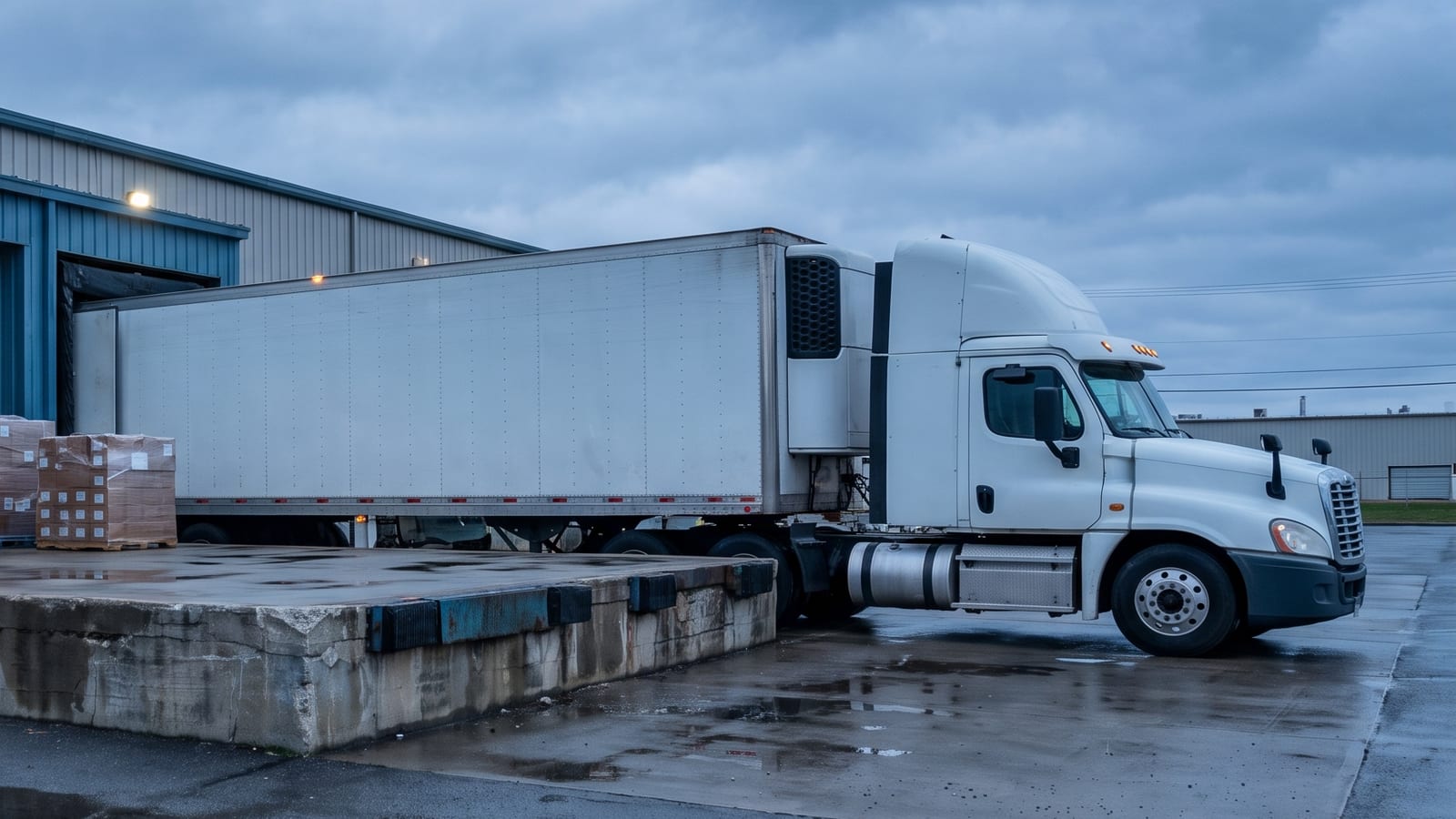
The first is receipt. The truck backs onto the dock, the pallets come off and are checked. The longer the check takes, the longer the goods wait in an uncontrolled space. Giving cold goods priority at receipt, so they are checked as soon as they arrive and moved straight into the cold area, shortens that wait.
Order preparation is the second. If goods are picked and staged outside the cold room, every order adds a small, repeated exposure.
During loading and unloading, a vehicle that was not pre-cooled or a door left open too long will strain even the best packaging.
In transport, especially on routes with several drops, the load space warms up every time the door opens.
Then comes delivery. The time between arrival and the moment the goods enter the customer’s refrigerator is often in nobody’s records.
Freezing is a deviation too
People think of warming when they hear “cold chain”, yet too much cold does damage as well. Some products, for example vaccines with aluminium adjuvants, can be damaged irreversibly by freezing. That is why coolant packs are conditioned as the packaging instructions say, so that they do not freeze the product.
Reducing the risk
Most measures are simple; the hard part is applying them every time:
- Time outside the controlled environment is kept short and recorded.
- Packaging and vehicles are qualified, meaning validated for the job.
- Data loggers travel with the goods.
- A written procedure says what happens when there is a deviation.
What gets recorded at a handover?
What the break points have in common is that the goods pass from one party to another. A short record at each handover keeps the answers to many later questions ready:
- the vehicle’s arrival time and the time the goods entered the controlled area,
- the logger’s status and readings, where there is one,
- the state of the packaging, including any crushed, wet or opened cartons,
- who handed the goods over and who received them.
When there is a deviation, these records make it easy to rebuild the timeline. How long the goods spent outside a controlled environment, and at which stage, is then known from the record rather than guessed.
When a deviation happens
When a logger shows a value outside the range, the goods go into quarantine at once: they are moved to a separate area and blocked in the system. The records are collected and sent to the product owner. Whether the product can be used is the owner’s decision, based on its stability data. The warehouse never decides alone; it neither releases the goods nor destroys them.
We look at how transport deviations are evaluated in a separate article. To see temperature differences inside the warehouse itself, the tool is temperature mapping.
References
- WHO Technical Report Series No. 961, Annex 9: Model guidance for the storage and transport of time- and temperature-sensitive pharmaceutical products (2011)
- European Commission, EU GDP Guidelines (2013/C 343/01), chapter 9
- USP General Chapter <1079>, Risks and Mitigation Strategies for the Storage and Transportation of Finished Drug Products
Information only; not a regulatory interpretation or a storage instruction.